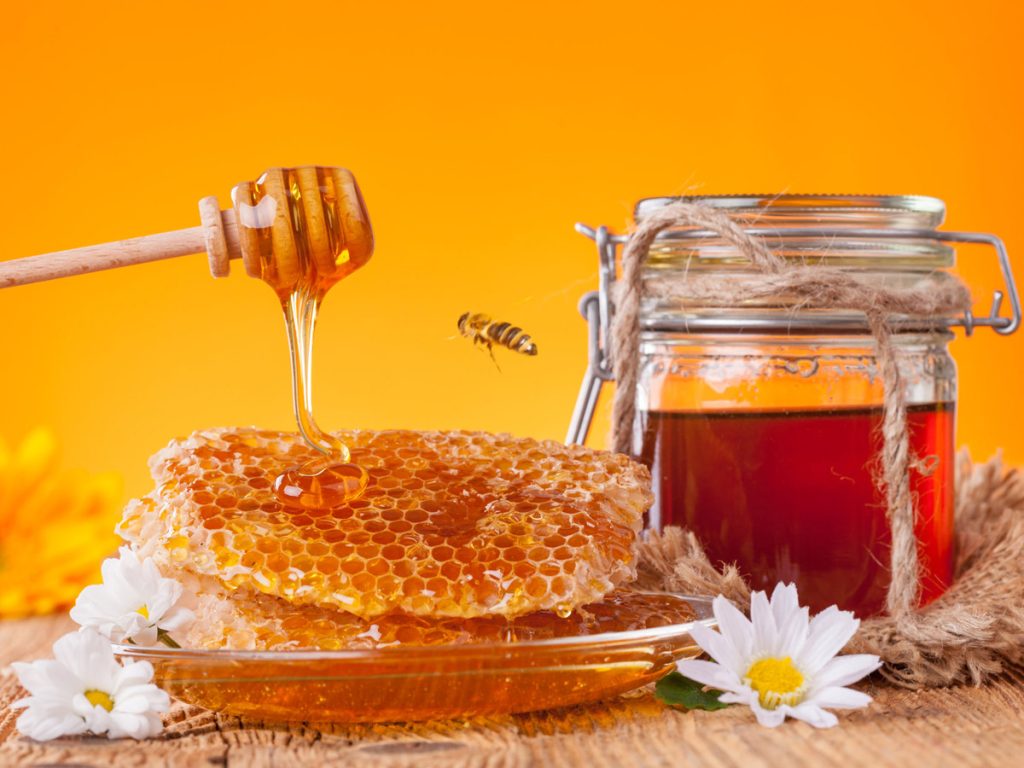
There is something remarkably simple about honey. It takes just one spoonful to add sweetness to tea, breakfast, desserts, sauces, or a homemade drink. Yet behind that golden sweetness is a natural process involving bees, flowers, seasons, and careful harvesting.
In Nigeria, honey production takes place across a wide range of environments, giving locally produced honey a fascinating diversity of colours, aromas, textures, and flavours. The honey produced in one area may taste noticeably different from honey harvested somewhere else because bees forage on different plants and flowers.
This is part of what makes Nigerian natural honey so interesting.
But how exactly does honey get from a flowering plant to a bottle? What makes natural honey different from processed sweeteners? Why does some honey crystallize while other honey remains liquid? And what should you look for when buying a jar?
Let’s take a closer look.
How Bees Turn Flower Nectar Into Honey
Honey begins with flowers.
When honeybees forage, they collect nectar from flowering plants and transport it back to the hive. The nectar is not yet the thick, sweet substance we know as honey. It contains considerably more water and has a different composition.
Inside the hive, the bees transform the nectar through a combination of enzymatic activity and water removal. The nectar gradually becomes more concentrated and develops the characteristics of mature honey.
Bees then deposit it into honeycomb cells, where it continues to mature. Once the honey is sufficiently prepared, the bees seal the cells with beeswax.
Beekeepers can subsequently harvest the honey from these honey-filled combs.
The USDA describes honey as a sweet substance produced by honeybees from plant nectar or certain plant-derived secretions, with colour ranging from nearly colourless to dark brown and consistency ranging from fluid to crystallized.
So when you open a jar of genuine honey, you are seeing the result of a biological process rather than simply a sweet syrup manufactured by mixing ingredients.
The Nigerian Landscape and Honey Production
Nigeria’s diverse vegetation provides bees with access to many different flowering plants.
This matters because the plants available to bees influence the resulting honey. Floral sources can affect its colour, aroma, flavour, and even how quickly it crystallizes.
This means there isn’t necessarily one universal “Nigerian honey” taste.
A honey harvested in one Nigerian environment can have a different character from another harvested elsewhere. Seasonal changes can also influence what plants are available for bees to forage.
That natural variation is one of the most appealing things about honey.
Rather than expecting every jar to look and taste identical, consumers can appreciate that honey reflects the environment from which it originated.
Why Nigerian Honey Can Have Different Colours
One jar of honey may be pale golden, another amber, and another considerably darker.
This does not automatically mean that one is pure and another is not.
Honey naturally occurs in a broad range of colours. The USDA notes that honey can range from nearly colourless to dark brown, with flavour and aroma influenced by plant origin.
The floral sources available to bees are therefore an important factor.
Other factors, including processing and storage, can also influence appearance.
For this reason, colour should not be used as a standalone test for honey quality.
A darker honey isn’t automatically more natural, and a lighter honey isn’t automatically less authentic.
What Gives Honey Its Flavour?
Honey’s flavour comes from more than its sweetness.
The floral source contributes subtle compounds that influence its aroma and taste. This can create differences ranging from delicate and floral to rich, intense, earthy, or more complex flavours.
This is why natural honey can be surprisingly interesting to taste.
Two jars may both contain honey, yet their sensory profiles can be noticeably different.
The USDA’s honey standards specifically recognize that flavour and aroma vary according to plant origin.
For Nigerian honey, this means the country’s botanical diversity can contribute to a wide range of honey characteristics.
What Happens When Honey Is Harvested?
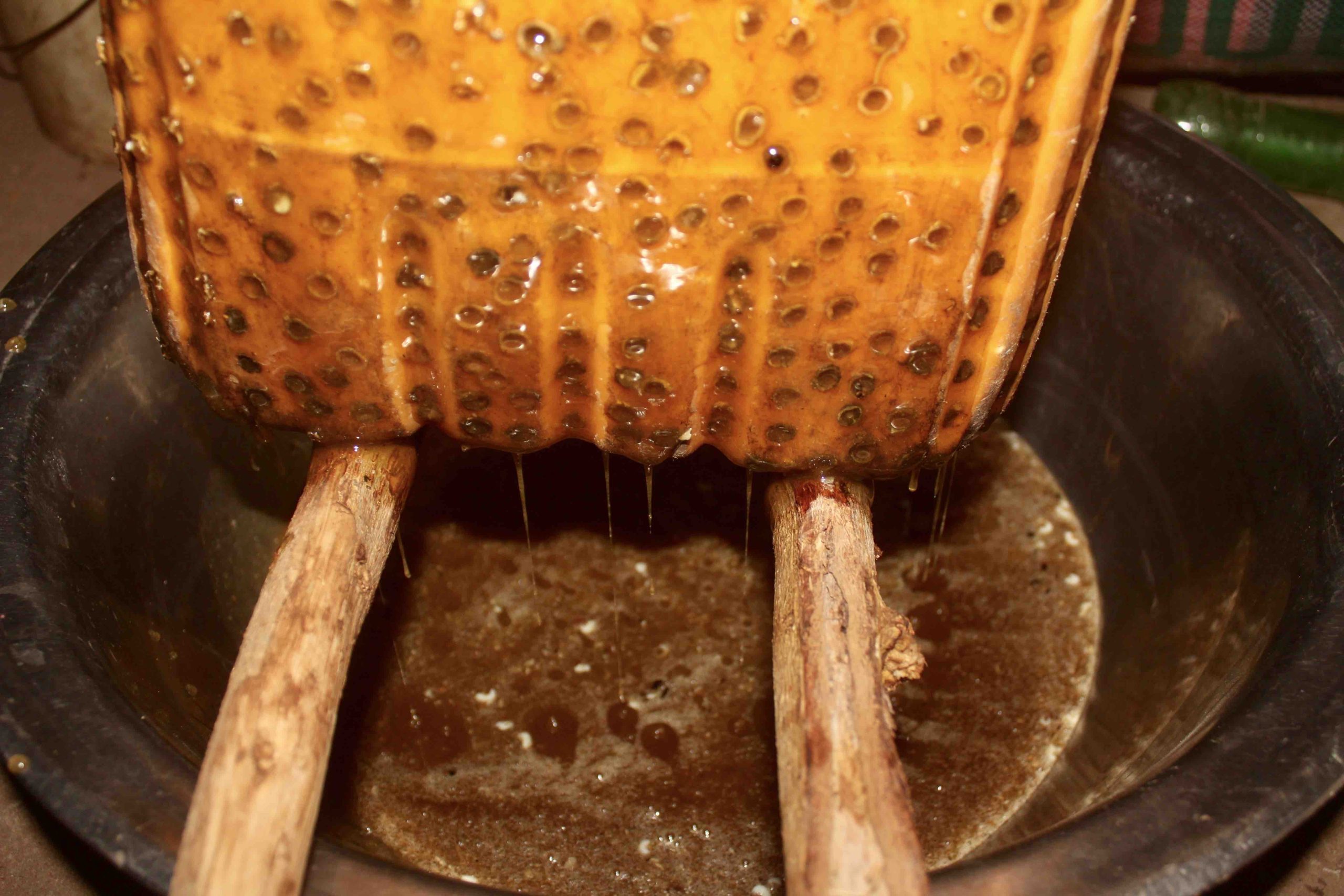
Once honey is mature and ready for harvesting, beekeepers remove honey-filled frames from the hive.
The honey can then be extracted from the comb.
Depending on the producer and desired product, it may be:
- Extracted mechanically
- Allowed to drain from the comb
- Strained to remove larger pieces of wax and other particles
- Filtered to achieve a particular appearance
- Packaged with minimal processing
Different processing methods can produce different types of honey.
For example, USDA apiculture standards describe raw honey as honey as it exists in the hive or as obtained through extraction, settling, or straining without added heat.
This is why it is useful to understand what a seller means when describing honey as “raw,” “strained,” “filtered,” or “natural.”
Why Does Honey Crystallize?
One of the most misunderstood things about honey is crystallization.
You may open a jar expecting a smooth, flowing liquid and discover that it has become thick, cloudy, or grainy.
That doesn’t necessarily mean something has gone wrong.
Honey naturally contains different sugars, including glucose and fructose. Under certain conditions, glucose can form crystals.
The USDA notes that most honey will naturally granulate or crystallize and that crystallization itself is not an indicator of adulteration. The rate depends partly on the honey’s sugar composition and storage temperature.
In fact, crystallized honey can still be perfectly enjoyable.
Some people prefer it in its thicker, spreadable form, while others prefer their honey liquid.
How to Return Crystallized Honey to a Liquid State
If you prefer liquid honey, gentle warming can help dissolve the crystals.
Place the closed container in warm water and allow the honey to gradually soften.
The important word is gentle.
Excessive heating can affect the characteristics of honey. USDA guidance on raw honey notes that heat and storage can influence characteristics such as enzymatic activity, antimicrobial properties, colour, and chemical composition.
There is therefore little reason to expose honey to unnecessarily high temperatures simply to make it liquid again.
Natural Honey Versus Honey-Flavoured Syrup
The growing popularity of honey has also created a challenge for consumers: not every product that looks like honey necessarily contains only honey.
Some products may contain other sweeteners or may be formulated as honey blends.
This is why reading the label matters.
The U.S. Food and Drug Administration continues to monitor honey for economically motivated adulteration, including the undeclared addition of lower-cost sweeteners. In its 2025 sampling assignment, FDA tested 102 domestic and imported honey samples and found four samples containing undeclared added sweeteners.
This doesn’t mean that consumers should assume honey products are fake. The majority of the samples tested in that assignment were compliant.
It does, however, reinforce an important lesson:
Know what you’re buying.
Look for clear labeling, transparent sourcing, and reputable producers.
Can You Tell Pure Honey With a Home Test?
The internet is full of supposed honey-purity tests.
You may have seen people recommend dropping honey into water, putting a match near it, spreading it on your thumb, or testing whether it dissolves quickly.
These tests are often presented as simple ways to determine whether honey is genuine.
They should not be treated as reliable scientific methods for determining honey authenticity.
Honey’s natural composition varies, and factors such as moisture content, temperature, floral source, and storage can influence how it behaves.
When authenticity needs to be established with confidence, laboratory analysis is the appropriate approach. FDA’s current honey surveillance, for example, uses analytical methods capable of identifying undeclared sweeteners rather than household demonstrations.
For everyday shoppers, purchasing from a trustworthy source and paying attention to labeling and product information is a much more sensible approach than relying on viral home experiments.
Ways to Enjoy Nigerian Natural Honey
Honey is one of those ingredients that doesn’t require a complicated recipe to be useful.
Add It to Breakfast
A drizzle of honey can complement:
- Toast
- Oatmeal
- Yogurt
- Pancakes
- Waffles
- Fresh fruit
- Granola
Its sweetness can transform a simple breakfast into something more enjoyable.
Sweeten Drinks
Honey can be stirred into tea, homemade beverages, smoothies, and other drinks.
It brings its own flavour, so the result can be more interesting than simply adding refined sugar.
Use It in Baking
Honey can contribute sweetness, moisture, colour, and flavour to baked foods.
Because honey contains water and behaves differently from granulated sugar, recipes may require adjustments when substituting honey for sugar.
Make Marinades and Glazes
Honey works particularly well in savoury recipes.
Its sweetness can balance spicy, salty, acidic, or savoury flavours, making it useful in marinades, sauces, and glazes.
Pair It With Fruit and Nuts
Honey, fruit, and nuts make a simple combination for breakfast or a snack.
Try drizzling honey over sliced bananas, apples, berries, yogurt, or roasted nuts.
How to Store Nigerian Natural Honey
Honey is relatively straightforward to store.
Keep the jar tightly closed and store it in a cool, dry place away from direct sunlight and excessive heat.
There is generally no need to refrigerate ordinary honey. Cold temperatures can make honey thicker and may encourage crystallization.
Always use clean, dry utensils when serving honey. Introducing water, food particles, or other contaminants into the container can affect the product.
A properly closed container also helps protect honey from absorbing moisture and unwanted odours from its surroundings.
What Should You Look for When Buying Honey?
When choosing Nigerian natural honey, don’t focus on just one visual characteristic.
Consider the whole product.
1. Source
Look for information about where the honey was produced or sourced.
A seller who can explain the origin and handling of the product provides useful transparency.
2. Ingredients
If you’re specifically looking for pure honey, check the ingredient information and product description carefully.
3. Packaging
The container should protect the honey properly and be suitable for food storage.
4. Aroma
Honey should have a characteristic aroma rather than smelling simply like generic sugar syrup.
5. Taste
Natural honey can have a broad range of flavours, but it should have a character beyond simple sweetness.
6. Crystallization
Don’t automatically reject honey because it has crystallized. Crystallization can occur naturally in genuine honey.
Honey Is Sweet, But That Doesn’t Mean Unlimited
Honey is a naturally occurring sweetener, but it is still primarily a sugar-rich food.
That distinction is important.
Calling honey “natural” does not mean that it should be consumed without consideration of the overall diet. Honey can be enjoyed as part of meals and recipes, but moderation remains sensible.
For products sold in the United States, FDA’s labeling guidance treats pure honey as a single-ingredient sugar or syrup for certain nutrition-labeling purposes, including the requirement to show the percent Daily Value for added sugars.
The takeaway is simple: natural origin and nutritional role are two different questions.
An Important Safety Note About Babies
There is one particularly important honey safety rule that every household should know:
Honey should not be given to children under 12 months of age.
Honey can contain spores of Clostridium botulinum, which can cause infant botulism. FDA specifically advises against giving honey to babies younger than one year.
This applies regardless of whether the honey is described as raw, natural, organic, local, or pure.
Nigerian Honey as a Local Food Product
Beyond its role as a sweetener, honey represents an opportunity to connect consumers with local agricultural production.
Beekeeping can form part of rural livelihoods, while bees themselves play an important role in pollination.
The relationship between bees, flowering plants, farmers, beekeepers, and consumers creates a much larger story than what appears on the label of a jar.
When consumers choose responsibly sourced Nigerian honey, they are also supporting a food supply chain built around local production and natural resources.
The Journey From Flower to Jar
It is easy to take honey for granted.
You open a jar, pour a little over breakfast, and move on with your day.
But every spoonful has a story.
It begins with flowering plants. Bees collect nectar. The nectar is transformed inside the hive. Honey is stored and matured in honeycomb. Beekeepers carefully harvest it. It is extracted, handled, packaged, transported, and eventually reaches your kitchen.
Nigerian natural honey is therefore a product shaped by bees, plants, seasons, environment, beekeeping, and careful handling.
Its colour may vary. Its flavour may vary. It may remain beautifully liquid or naturally crystallize over time.
Those differences aren’t necessarily signs of inconsistency. They are part of the character of a naturally produced food.
Frequently Asked Questions About Nigerian Natural Honey
What is Nigerian natural honey?
Nigerian natural honey is honey produced by bees from nectar collected from flowering plants in Nigeria. Its flavour, colour, aroma, and texture can vary depending on its floral source and how it is harvested and handled.
Why does natural honey crystallize?
Honey naturally contains sugars that can form crystals, particularly glucose. Crystallization is a natural process and does not by itself indicate that honey is fake or spoiled.
Is darker honey better than lighter honey?
Not necessarily. Honey naturally ranges from very light to dark brown, and colour is influenced by floral source and other factors. Colour alone is not a reliable measure of quality.
How should Nigerian natural honey be stored?
Store honey tightly sealed in a cool, dry place away from excessive heat and direct sunlight. Refrigeration is generally unnecessary.
Can crystallized honey still be eaten?
Yes. Crystallization is a natural characteristic of honey and does not automatically mean that the honey has gone bad.
How can I know if honey is pure?
There is no dependable household test that can conclusively establish honey authenticity. Consider the source, labeling, and reputation of the seller. Laboratory analysis is the appropriate method for definitive testing.
Can honey be used for cooking?
Yes. Honey can be used in drinks, baking, sauces, marinades, dressings, breakfast foods, and desserts.
Can babies eat natural honey?
No. Honey should not be given to children under 12 months because of the risk of infant botulism.
The Simple Beauty of Natural Honey
Nigerian natural honey is a reminder that some of the most fascinating foods are also some of the simplest.
There is no complicated manufacturing process behind the basic product. Bees gather nectar from flowers, transform it naturally, and store it in the hive. Beekeepers then harvest and handle the honey before it eventually reaches the consumer.
What you get in the jar is influenced by the landscape, the plants, the season, the bees, and the people who care for the hives.
That is what makes every jar of natural honey more than just a source of sweetness.
It is a small taste of the environment from which it came—and a remarkably versatile ingredient that can find a place in almost any kitchen.