
For many Nigerians, garri needs no introduction. It is one of the country’s most familiar and versatile food staples, enjoyed in homes, student hostels, restaurants, and kitchens across the country. But among the many varieties of garri available, Ijebu Garri has earned a particularly strong reputation for its distinctive sour taste, crisp texture, and unmistakable character.
Often enjoyed simply by soaking it in cold water or served alongside soups and other Nigerian dishes, Ijebu Garri is much more than dried cassava flakes. It is a product of a traditional cassava-processing method and an important part of Nigerian food culture.
Whether you already love Ijebu Garri or are discovering it for the first time, understanding how it is made, what makes it different, and the many ways it can be enjoyed gives you a new appreciation for this humble but remarkably versatile food.
What Is Ijebu Garri?
Ijebu Garri is a variety of garri, a Nigerian food made from processed cassava. Garri is produced by grating cassava roots, fermenting the grated cassava, pressing it to remove excess moisture, sieving it, and roasting or frying the resulting granules until they become dry and crisp.
The name “Ijebu Garri” is associated with the Ijebu people and the Ijebu area of southwestern Nigeria. It is particularly known for its characteristic tangy or sour flavour, fine-to-medium grain texture, and dry, crunchy consistency.
Unlike some milder varieties of garri, Ijebu Garri is often appreciated specifically because of its pronounced fermented taste. For people who enjoy garri with a noticeable sharpness, that distinctive flavour is part of the attraction.
The finished product is lightweight, easy to store, and remarkably versatile. It can be eaten dry, soaked in water, paired with different ingredients, or used as an accompaniment to traditional Nigerian soups and meals.
Where Does Ijebu Garri Come From?
Ijebu Garri is traditionally associated with Ijebu, a historic Yoruba region in southwestern Nigeria. The area is part of Ogun State and has a long-standing connection with cassava cultivation and processing.
Garri production itself is widespread throughout Nigeria, so not every garri produced in southwestern Nigeria is necessarily Ijebu Garri. What gives Ijebu Garri its identity is the combination of regional tradition, processing practices, fermentation, roasting, and the flavour profile associated with the variety.
Food traditions often develop through generations of preparation and refinement. Ijebu Garri is a good example of this. What may appear to be a simple bag of cassava flakes represents a process that connects agricultural production, traditional food preparation, and everyday Nigerian eating culture.
What Makes Ijebu Garri Different?
If you have tasted different types of garri, you may notice that they are not all the same. Differences in cassava varieties, fermentation, processing methods, roasting, and preparation can influence the final product.
Ijebu Garri is particularly recognized for several characteristics.
1. Its Distinctive Sour Taste
The most obvious characteristic is its tangy, fermented flavour.
Fermentation is an important stage of garri production. During this process, naturally occurring microorganisms help transform the grated cassava and contribute to the characteristic flavour of the finished product.
For Ijebu Garri lovers, the sourness is not a flaw—it is one of the reasons they specifically seek it out.
2. Its Crisp Texture
Well-processed garri should be dry and crisp. Ijebu Garri is often enjoyed for its crunchy texture, particularly when eaten dry or lightly soaked.
When soaked in cold water, the granules absorb water while retaining some of their characteristic texture, creating a simple but satisfying meal or snack.
3. Its Fine Granules
Ijebu Garri is commonly associated with relatively fine granules. The exact size can vary depending on how it is processed, sieved, and roasted, but the texture is generally one of the qualities people look for when choosing it.
4. Its Strong Culinary Identity
Perhaps most importantly, Ijebu Garri has developed an identity of its own. People don’t simply ask for “garri”; many specifically ask for Ijebu Garri because they want its characteristic taste and texture.
How Is Ijebu Garri Made?
Although production methods can vary between producers, traditional garri production generally involves several important stages.
Harvesting the Cassava
The process begins with cassava roots. Mature cassava is harvested and transported for processing.
Fresh cassava is highly perishable, so processing typically needs to take place relatively soon after harvesting.
Peeling and Washing
The cassava roots are peeled to remove the outer layers and then thoroughly washed to remove dirt and other unwanted material.
Proper cleaning is essential because the quality of the finished garri begins with the quality and handling of the raw cassava.
Grating
The cleaned cassava is grated into a fine pulp. Traditionally, this could be done manually, although mechanical graters are now widely used to make the process faster and more consistent.
Fermentation
The grated cassava is allowed to ferment for a period of time.
This is one of the most important stages in determining the character of garri. Fermentation contributes to the development of its flavour and also plays an important role in processing cassava safely.
For Ijebu Garri, the fermentation process is particularly significant because it contributes to the tangy flavour associated with the product.
Pressing
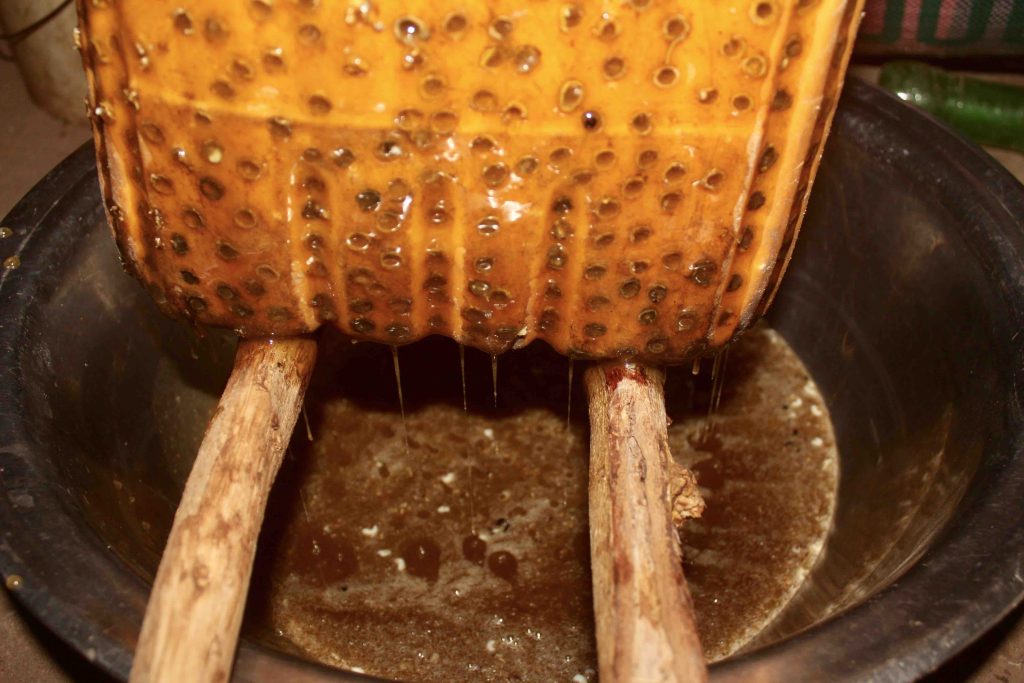
After fermentation, the cassava pulp is pressed to remove excess water.
Traditionally, this has been done using heavy weights or mechanical pressing systems. Proper pressing helps prepare the cassava for the next stages of processing.
Sieving
The pressed cassava is broken up and sieved to remove lumps and create relatively uniform granules.
The size of these granules contributes to the final texture of the garri.
Roasting
The granulated cassava is then roasted or fried in a large pan.
This stage removes remaining moisture and transforms the processed cassava into the dry, crunchy flakes that people recognize as garri.
The roasting process requires attention because excessive heat can affect the colour, flavour, and overall quality of the finished product.
Cooling and Packaging
Once roasting is complete, the garri is allowed to cool before being packaged.
Good packaging is particularly important because garri needs to remain dry. Exposure to moisture can negatively affect its texture and freshness.
Why Does Ijebu Garri Taste Sour?
The sour taste of Ijebu Garri primarily comes from the fermentation process used during cassava processing.
Fermentation changes the characteristics of the cassava pulp and contributes to the flavour profile of the finished product. The length and conditions of fermentation can influence how pronounced that flavour becomes.
This is why fermentation is not merely a technical step in making garri. It is also an important part of what gives different types of garri their distinctive character.
For someone accustomed to sweeter or milder garri, Ijebu Garri may initially taste noticeably sharp. For regular consumers, however, that tangy flavour is precisely what makes it appealing.
How Do You Eat Ijebu Garri?
One of the best things about Ijebu Garri is how many ways it can be enjoyed.
Soaked Garri
The classic method is incredibly simple.
Place garri in a bowl or cup, add cold water, and allow it to absorb some of the water. You can then add ingredients according to your preference.
Popular additions include:
- Groundnuts or roasted peanuts
- Sugar
- Milk
- Coconut
- Evaporated milk
- Ice cubes
Some people prefer their garri lightly soaked so that it remains crunchy, while others allow it to absorb more water for a softer texture.
Garri and Groundnuts
Few combinations are more familiar in Nigeria than garri and groundnuts.
The crunchy, slightly sour garri pairs naturally with the rich, roasted flavour of peanuts. It is a simple combination, but its appeal has kept it popular for generations.
Garri With Sugar and Milk
For those who prefer a richer and creamier preparation, sugar and milk can transform soaked garri into a more indulgent snack or light meal.
The combination of cold water, garri, milk, and sugar is especially popular when something quick and refreshing is needed.
Garri as an Accompaniment to Soup
Garri does not have to be soaked.
In many Nigerian homes, garri can be prepared with hot water into a dough-like swallow and served with soups such as egusi, okra, vegetable soup, or other regional favourites.
However, the type and texture of garri people prefer for swallow can differ from the variety they choose specifically for soaking.
Can You Eat Ijebu Garri Dry?
Yes. Some people enjoy garri straight from the package, particularly as a crunchy snack.
Dry garri can also be paired with roasted groundnuts or other snacks. However, if eating it dry, it is especially important to choose a clean, properly processed product and store it correctly.
Its dry, crunchy nature is one of the reasons garri is so convenient. Unlike many fresh foods, properly dried garri can be stored for an extended period when kept away from moisture and contamination.
How to Choose Good-Quality Ijebu Garri
Not every bag of garri will have the same quality. When buying Ijebu Garri, consider several factors.
Check the Appearance
Good garri should generally have a clean and consistent appearance. The colour can vary depending on the cassava, processing method, and roasting, so colour alone should not determine quality.
Look at the Texture
The granules should be appropriately dry and crisp rather than damp or clumped together.
If the garri has absorbed moisture, it may lose the texture that makes it enjoyable.
Consider the Aroma
Fresh garri should have a characteristic roasted and fermented aroma. An unusual musty or stale smell can be a sign of poor storage or deterioration.
Look for Clean Processing
Quality also depends on hygiene throughout production, from handling the cassava to processing, roasting, cooling, and packaging.
For packaged garri, choose products from producers who demonstrate good food-handling and packaging practices.
Think About the Taste You Want
If you specifically want Ijebu Garri, the characteristic tangy flavour should be an important consideration. If you prefer milder garri, another variety may suit your palate better.
How Should Ijebu Garri Be Stored?
Because garri is a dry food, moisture is one of its biggest enemies.
Once opened, keep it in a clean, dry, airtight container. Store the container away from water, humidity, and direct heat.
Avoid using wet utensils when scooping garri. Even a small amount of moisture introduced into the package can affect its texture and freshness.
Proper storage also helps protect the product from insects, dust, and other contaminants.
If you buy garri in bulk, consider dividing it into smaller airtight containers rather than repeatedly opening one large container.
Is Ijebu Garri the Same as Yellow Garri?
Not necessarily.
Garri comes in different forms and colours, and the differences can result from processing methods and other factors. Yellow garri, for example, is commonly associated with the addition or presence of palm oil during processing, giving it a characteristic yellow appearance.
Ijebu Garri is primarily identified by its regional association and distinctive flavour and texture rather than simply by its colour.
This distinction is important because garri is a broad food category, while Ijebu Garri refers to a particular style and tradition within that category.
Ijebu Garri and Nigerian Food Culture
Garri occupies an interesting position in Nigerian food culture because it can be both an everyday staple and a nostalgic food.
For some people, it brings memories of childhood, school days, family kitchens, or quick meals prepared when there was little time for cooking. For others, it is simply a dependable pantry staple that is always useful to have around.
Its affordability, convenience, long storage potential, and versatility have helped garri remain relevant across generations.
Ijebu Garri adds another dimension to this tradition. Its distinctive taste gives it a strong regional identity while its popularity extends far beyond the Ijebu area.
Why Is Ijebu Garri So Popular?
The popularity of Ijebu Garri comes down to a combination of simplicity and character.
It is:
Versatile: It can be soaked, eaten dry, prepared as swallow, or enjoyed alongside other foods.
Convenient: It requires little preparation when eaten as soaked garri.
Easy to store: Properly dried and packaged garri can be kept as a pantry staple.
Distinctive: Its tangy flavour sets it apart from milder varieties.
Familiar: Garri has a deep connection with everyday Nigerian food culture.
Easy to customize: You can make soaked garri as simple or elaborate as you like.
That combination makes it difficult to replace with a single alternative food.
Frequently Asked Questions About Ijebu Garri
What is Ijebu Garri made from?
Ijebu Garri is made primarily from cassava roots. The cassava is peeled, washed, grated, fermented, pressed, sieved, and roasted to produce the dry granules known as garri.
Why is Ijebu Garri sour?
Its characteristic sour or tangy taste comes largely from the fermentation stage of cassava processing. The duration and conditions of fermentation can influence the intensity of the flavour.
Can Ijebu Garri be eaten with groundnuts?
Yes. Garri and groundnuts are a classic Nigerian combination. You can eat them dry or add groundnuts to soaked garri.
Can you soak Ijebu Garri?
Yes. Soaking is one of the simplest and most popular ways to enjoy Ijebu Garri. It can be combined with ingredients such as groundnuts, milk, sugar, coconut, or ice.
How long does Ijebu Garri last?
Its shelf life depends on how it was processed, packaged, and stored. Keeping it completely dry in a clean, airtight container helps preserve its quality for longer.
What is the difference between Ijebu Garri and regular garri?
“Ijebu Garri” refers to a specific style of garri associated with the Ijebu region and is particularly known for its tangy, fermented flavour and characteristic texture. “Garri” is the broader term covering different varieties.
Is Ijebu Garri only eaten in southwestern Nigeria?
No. Although it has strong roots in southwestern Nigeria, Ijebu Garri is enjoyed by people across Nigeria and by Nigerians and African food lovers around the world.
A Simple Food With a Distinctive Identity
Ijebu Garri demonstrates how much character can be found in a seemingly simple staple.
From cassava roots to grated pulp, fermentation, pressing, sieving, and roasting, the production process transforms a fresh agricultural crop into a versatile food that can be enjoyed in countless ways.
Its sharp, distinctive taste may be what first attracts people to it, but its convenience and versatility are what keep it in many Nigerian kitchens.
Whether you enjoy it soaked with groundnuts and milk, eat it straight from the bowl for its satisfying crunch, or serve it as a traditional accompaniment to soup, Ijebu Garri remains one of Nigeria’s most recognizable and adaptable cassava foods.
And for those who already know the difference, there is little confusion about why they specifically ask for Ijebu Garri. Sometimes, it is that unmistakable sour taste that makes all the difference.