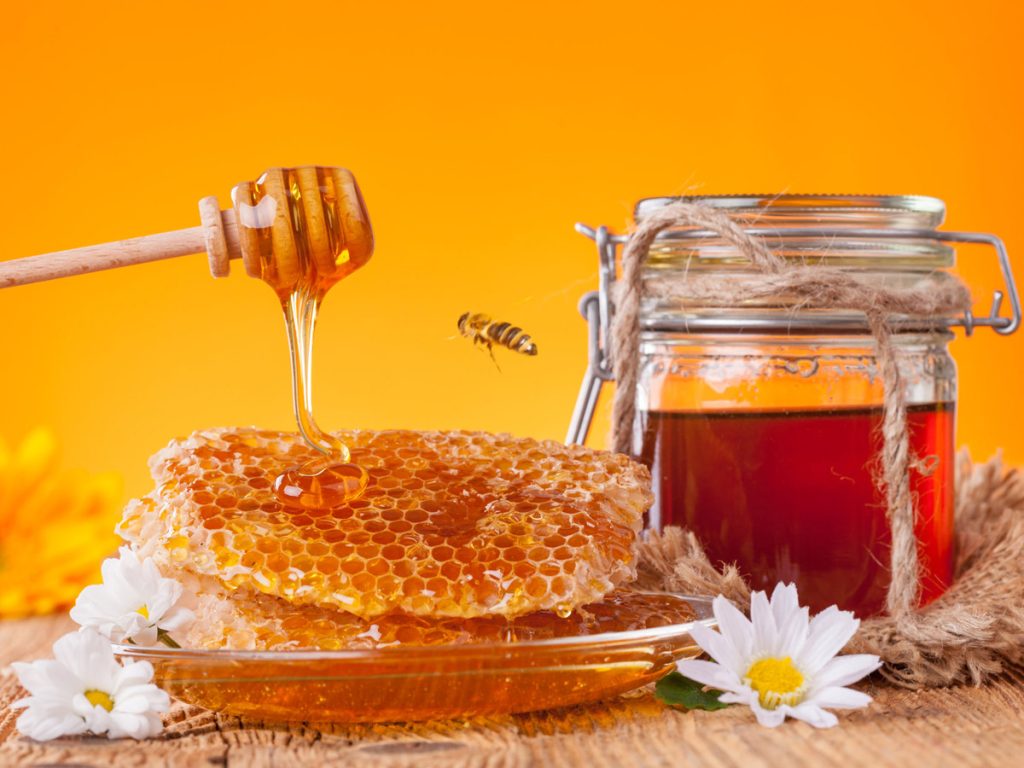

Honey has a way of making a simple meal feel special. A little drizzled over toast, stirred into a warm drink, added to breakfast, or used in a homemade recipe can transform an ordinary dish with very little effort.
But when you buy a jar of Nigerian natural honey, you are buying more than a sweet ingredient. You are getting a product shaped by bees, flowering plants, seasons, local environments, beekeeping practices, and the way the honey is harvested and handled.
Nigeria has a diverse agricultural and ecological landscape, and beekeeping is practiced using both traditional and modern hives. Data from Nigeria’s National Agricultural Sample Survey even tracks honey production separately for traditional and modern beehives, showing that apiculture forms part of the country’s agricultural activity.
So what should you know about Nigerian honey? How does it get from the hive to the bottle? Why can two jars look and taste different? And what should you consider when choosing a quality product?
Let’s explore the journey behind one of nature’s most familiar foods.
What Exactly Is Natural Honey?
Natural honey is a sweet substance produced by bees from nectar collected from flowering plants.
Bees collect nectar and take it back to the hive, where it undergoes natural transformation before being stored in honeycomb. The resulting honey can vary considerably in colour, aroma, flavour, and consistency depending largely on the plants from which the bees collected nectar.
This is important because there is no single appearance that all genuine honey must have.
Natural honey can be:
- Light golden
- Amber
- Deep brown
- Clear
- Cloudy
- Thick
- Fluid
- Naturally crystallized
These differences do not automatically mean that one honey is genuine and another is not.
In fact, natural variation is part of honey’s character.
The Journey Begins With Flowers
Before honey reaches a bottle, it begins in a much more colourful place: a flowering plant.
Bees travel from flower to flower collecting nectar. The plants available in their surroundings influence the nectar available to them, which ultimately influences the characteristics of the honey.
This is why honey from different regions can have noticeably different flavours.
The Food and Agriculture Organization explains that the colour, aroma, and consistency of honey depend on the flowers bees forage on.
For Nigerian honey, this creates an interesting connection between the final product and the environment where the bees live.
The honey in a jar can carry subtle characteristics of the botanical landscape surrounding the hives.
How Bees Produce Honey
The process is surprisingly sophisticated.
Worker bees collect nectar and transport it back to the colony. Within the hive, the nectar is transformed through enzymatic processes and the removal of water.
The bees then store the developing honey in honeycomb cells.
As the honey matures, the bees eventually seal the cells with beeswax.
Beekeepers can then harvest the honey-filled combs and extract the honey for consumption.
What looks like a simple golden liquid is therefore the result of an intricate natural process involving thousands of bee movements, plant nectar, enzymes, evaporation, and storage inside the hive.
Nigerian Beekeeping: Traditional and Modern Approaches
Honey production in Nigeria is not limited to one type of hive or one production method.
Nigeria’s National Agricultural Sample Survey includes both traditional and modern beehives in its agricultural data collection.
Traditional beekeeping can make use of locally available materials and long-established knowledge, while modern beekeeping systems may incorporate equipment designed to make hive management and honey harvesting more efficient.
Both approaches can form part of Nigeria’s honey-production landscape.
What matters to consumers is not simply whether a traditional or modern hive was used. Good honey production also depends on appropriate hive management, responsible harvesting, hygiene, handling, and storage.
Why Nigerian Honey Doesn’t Always Taste the Same
If you have tried honey from different sources, you may have noticed something interesting:
Honey doesn’t always taste the same.
One jar may taste light and floral. Another may have a richer, deeper flavour. Another may have subtle earthy or botanical notes.
This variation is natural.
The plants available to bees influence the nectar they collect, and therefore influence the final honey. FAO specifically notes that honey’s colour, aroma, and consistency depend on the flowers bees forage on.
This means it isn’t useful to judge all Nigerian honey against one fixed flavour profile.
Instead, part of the enjoyment is discovering the character of different honeys.
Does Darker Honey Mean Better Honey?
Not necessarily.
This is one of the common assumptions people make when buying honey.
A darker colour can sometimes be associated with particular floral sources, but colour alone does not establish whether honey is pure, superior, or more nutritious.
Natural honey ranges from nearly colourless to dark brown.
So when choosing honey, don’t rely solely on how dark or light it looks.
Consider the source, labeling, handling, packaging, aroma, taste, and reputation of the producer or seller.
Why Does Honey Become Thick or Crystallized?
You may buy a jar of honey that is beautifully fluid and golden. Months later, you may notice that it has become thicker, cloudy, or grainy.
This can be completely natural.
Honey can crystallize as its sugars form crystals. Different honeys crystallize at different rates because their composition varies.
Crystallization is therefore not, by itself, proof that honey has gone bad or has been adulterated.
Naturally crystallized honey is recognized as a normal form of honey.
Some people actually prefer crystallized honey because of its thicker, spreadable texture.
If you prefer liquid honey, gentle warming can help restore a more fluid consistency.
Raw Honey, Natural Honey and Pure Honey: Are They the Same?
These terms are often used interchangeably in everyday conversation, but they can communicate different things depending on the product and labeling.
Natural honey generally refers to honey produced naturally by bees rather than an artificial honey-flavoured syrup.
Pure honey generally emphasizes that the product is honey rather than a mixture containing other sweeteners.
Raw honey is often used to describe honey that has undergone minimal processing, although the exact meaning can vary by market and labeling practice.
This is why consumers should pay attention to the actual product information rather than relying on one word printed prominently on the front of a jar.
A trustworthy honey seller should be able to provide clear information about what the product is and how it has been handled.
From Hive to Jar: What Happens After Harvesting?
Once honey is ready for harvest, beekeepers remove honey-filled frames from the hive.
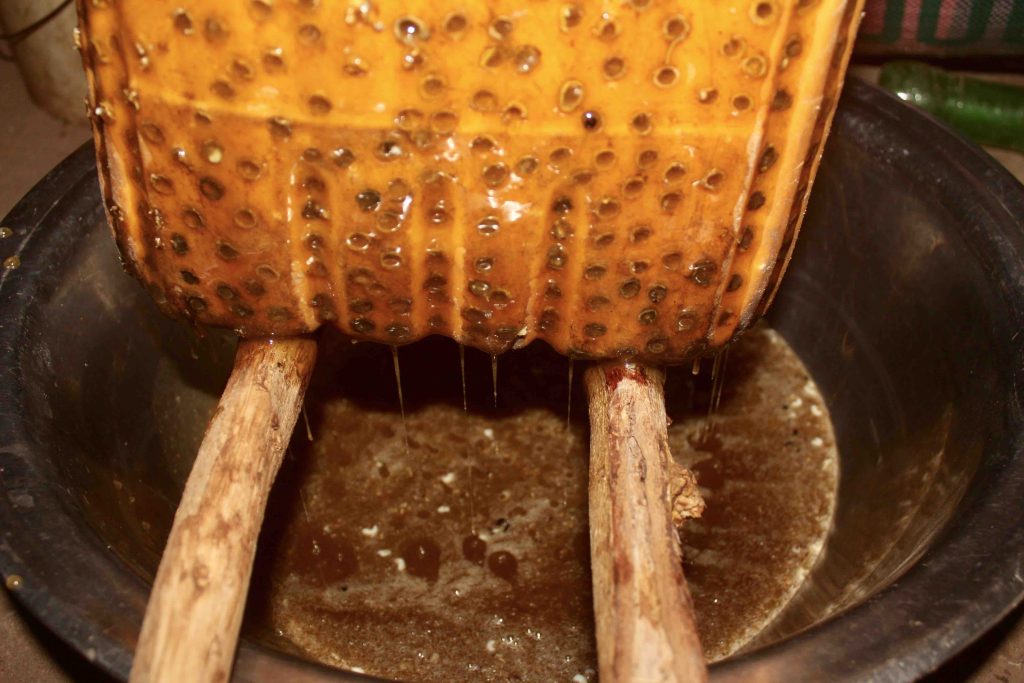
The honey then needs to be separated from the honeycomb.
Depending on the production method, honey can be extracted and then strained or filtered to remove larger pieces of beeswax and other visible material.
Some honey is minimally processed, while other products may undergo additional processing.
The way honey is handled after harvest can influence its final appearance and characteristics.
This is why good hygiene and appropriate storage are just as important as the honey’s origin.
What Makes a Good Jar of Nigerian Honey?
When shopping for honey, it can be tempting to judge the product based on colour alone.
A better approach is to consider several characteristics together.
1. Clear Product Information
Look for a product with clear labeling and useful information about the honey.
If a seller can explain where the honey comes from and how it is handled, that can provide additional confidence.
2. Appropriate Packaging
Honey should be packaged in a clean, suitable container that protects it during transportation and storage.
3. Pleasant Aroma
Natural honey generally has a recognizable aroma influenced by its floral source.
A product that smells unusual, stale, or simply like generic syrup may deserve closer consideration.
4. Distinctive Flavour
Good honey should have more character than sweetness alone.
The exact flavour will vary, but floral and botanical notes can contribute to the experience.
5. Proper Storage
Even good honey can be compromised by poor handling.
The product should be protected from contamination, excessive heat, moisture, and inappropriate storage conditions.
Don’t Believe Every Honey “Purity Test” You See Online
Search online for “how to test pure honey” and you will find countless home experiments.
Some involve water.
Others involve matches, paper, bread, a person’s thumb, or observing how quickly honey dissolves.
These tests may be entertaining, but they are not reliable methods for scientifically establishing honey authenticity.
Honey naturally varies in composition, and its behaviour can change depending on temperature, moisture, floral source, and other factors.
If authenticity needs to be established scientifically, laboratory analysis is the appropriate approach.
For everyday consumers, a more practical strategy is to purchase from a reputable seller who provides transparent product information and follows appropriate food-handling practices.
How to Enjoy Nigerian Natural Honey
One of the reasons honey remains so popular is its versatility.
You don’t need a complicated recipe to enjoy it.
Honey With Breakfast
Try drizzling honey over:
- Toast
- Oatmeal
- Yogurt
- Pancakes
- Waffles
- Granola
- Fresh fruit
The natural sweetness can make simple breakfast foods more enjoyable.
Honey in Tea and Drinks
Honey can be used as a sweetener in tea and other beverages.
It can also be incorporated into homemade drinks, smoothies, and recipes where a naturally derived sweetener is desired.
Honey in Baking
Honey can contribute sweetness, moisture, colour, and flavour to baked foods.
It can be used in cakes, bread, cookies, muffins, and other recipes, although recipes may require adjustments because honey does not behave exactly like granulated sugar.
Honey in Sauces and Marinades
Honey’s sweetness works beautifully with savoury and spicy ingredients.
It can be used in glazes, marinades, salad dressings, sauces, and roasted dishes.
The result can be a balance of sweet, salty, acidic, spicy, and savoury flavours.
Honey Is Not Just for Breakfast
There is a tendency to think of honey primarily as something that belongs in tea or on toast.
Its culinary potential is much broader.
Honey can become part of:
Salad dressings: Combine honey with an acidic ingredient and oil for a simple dressing.
Marinades: Its sweetness can complement spices and savoury ingredients.
Desserts: Use it with fruit, yogurt, nuts, or baked foods.
Sauces: Honey can add sweetness and body to certain sauces and glazes.
Snacks: A small drizzle over fruit and nuts can create a simple snack with very little preparation.
This versatility is one reason a jar of good honey can become a useful pantry staple.
How to Store Nigerian Natural Honey
Honey is relatively easy to store, but a few habits can help preserve its quality.
Keep the container tightly closed when not in use.
Store it in a cool, dry location away from direct sunlight and excessive heat.
There is generally no need to refrigerate honey.
Always use a clean, dry spoon when serving it. Introducing water, food particles, or other contaminants into the jar can affect the product.
If crystallization occurs, remember that this can be a natural process rather than a sign of spoilage.
Honey and the Nigerian Agricultural Economy
The story of honey is also a story about agriculture.
Beekeeping connects bees, flowering plants, farmers, beekeepers, processors, retailers, and consumers.
Nigeria’s agricultural survey data explicitly records apiary activity and honey production, including the number of traditional and modern hives and honey yield per hive.
At the broader African level, FAO has highlighted honey production as a growing area, reporting that Africa recorded the highest growth rate in honey production over the decade covered in its analysis.
This makes locally produced honey more than a household sweetener. It is also part of a wider agricultural ecosystem.
Why Buying Local Honey Can Be Meaningful
When you purchase Nigerian honey from a trustworthy local source, you are helping create demand for a product that can be produced within the country’s agricultural economy.
For consumers, this can mean access to a product with a stronger connection to its place of origin.
For beekeepers and other participants in the supply chain, consumer demand can help create opportunities to develop and maintain honey production.
And for the environment, healthy bee populations and functioning pollination systems have importance far beyond the honey that ends up in a jar.
Honey is therefore part of a much bigger relationship between agriculture, biodiversity, livelihoods, and food.
A Note About Honey and Health
Honey is often discussed online as though it were a cure-all for a long list of health conditions.
It is better to be more careful.
Honey is a food and a source of sugars. Being natural does not automatically make it appropriate to consume without limits, nor does every claim made about honey online have strong scientific support.
Its most straightforward role is as a sweet food and versatile ingredient.
Enjoy it as part of a balanced diet rather than treating it as a substitute for medical care.
And there is one important safety rule that should never be overlooked: children younger than 12 months should not be given honey because of the risk of infant botulism.
Nigerian Honey Is a Reflection of Its Environment
Perhaps the most fascinating thing about Nigerian natural honey is that it cannot be separated entirely from the environment in which it is produced.
The flowers available to bees influence the nectar.
The nectar influences the honey.
The season influences which flowers are available.
The beekeeper influences how the hive is managed and how the honey is harvested.
And handling and storage influence the condition in which the final product reaches the consumer.
What appears to be a simple golden liquid is therefore the result of an entire chain of natural and human processes.
Frequently Asked Questions About Nigerian Natural Honey
What is Nigerian natural honey?
It is honey produced by bees from nectar collected from flowering plants in Nigeria. Its colour, aroma, flavour, and consistency can vary according to floral source and other production factors.
Why are some Nigerian honeys darker than others?
Honey naturally occurs in a range of colours. The plants from which bees collect nectar are an important factor influencing colour, so darker honey is not automatically better or more authentic.
Does crystallized honey mean it is fake?
No. Natural honey can crystallize, and naturally crystallized honey is recognized as a normal form of honey.
Can I use Nigerian honey for cooking?
Yes. Honey can be used in breakfast foods, baking, marinades, sauces, dressings, desserts, and beverages.
Should honey be stored in the refrigerator?
Generally, no. Honey can normally be stored in a tightly closed container at room temperature in a cool, dry place.
How can I tell if honey is pure?
No simple household test can reliably establish honey authenticity. Look for transparent labeling and a reputable source; laboratory analysis is the appropriate method for definitive authenticity testing.
Does all Nigerian honey taste the same?
No. Honey’s flavour can vary depending on the flowers available to bees and other factors.
Can babies eat natural honey?
No. Honey should not be given to infants under 12 months because of the risk of infant botulism.
From Nigerian Hives to Everyday Tables
The next time you open a jar of Nigerian natural honey, consider everything that went into it.
There were flowers providing nectar, bees collecting and transforming that nectar, a hive where the honey matured, and a beekeeper who eventually harvested it.
There was also the journey from the apiary through extraction, handling, packaging, transportation, and finally into your kitchen.
That is what makes honey such an interesting food.
It is naturally sweet, remarkably versatile, and closely connected to the environment where it is produced. Nigerian honey adds another layer to that story by connecting consumers with local beekeeping and the country’s diverse agricultural landscape.
Whether you enjoy it over breakfast, stir it into a drink, use it in a recipe, or simply appreciate its distinctive flavour, Nigerian natural honey is a simple food with a surprisingly rich story behind every jar.